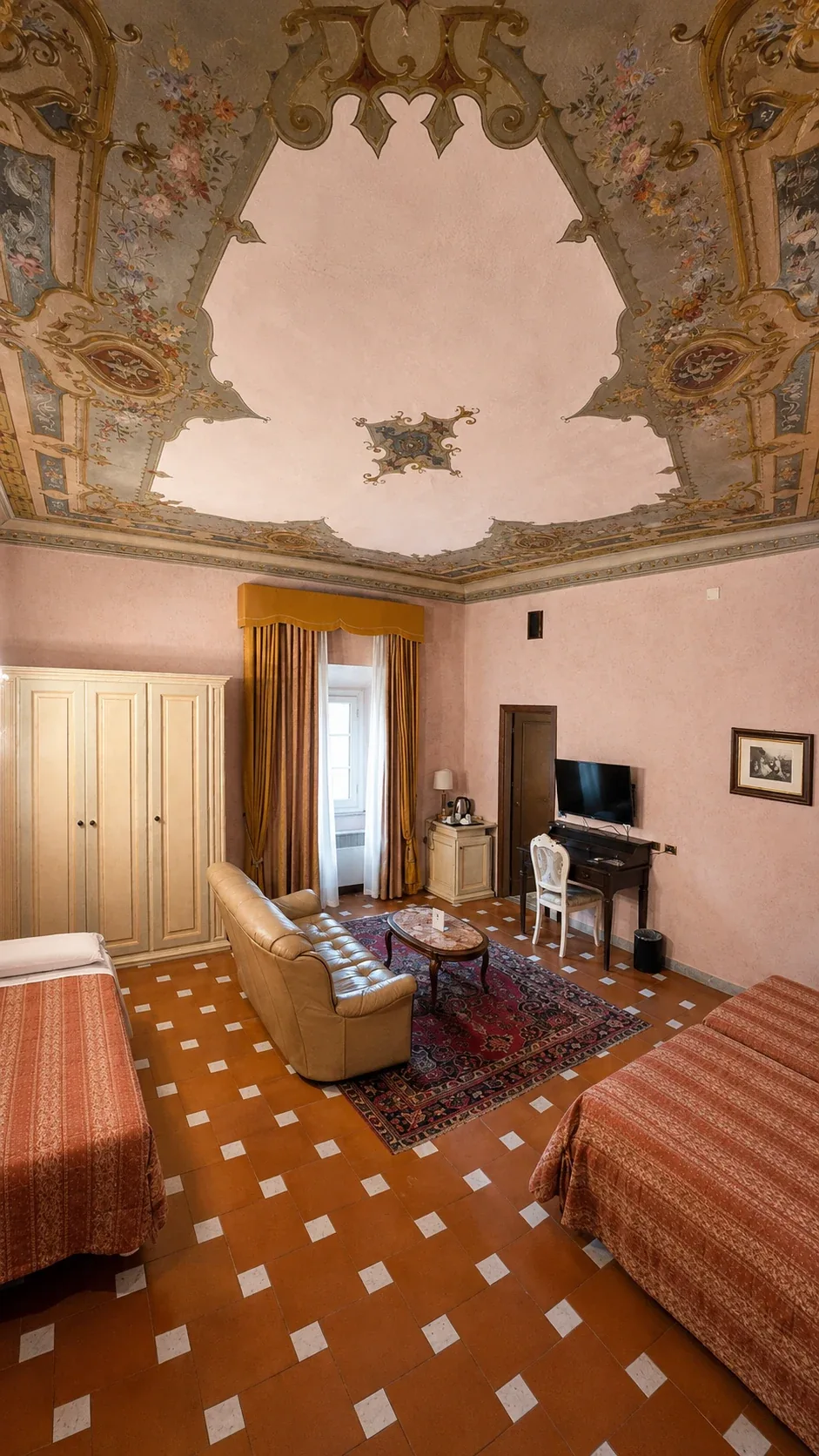
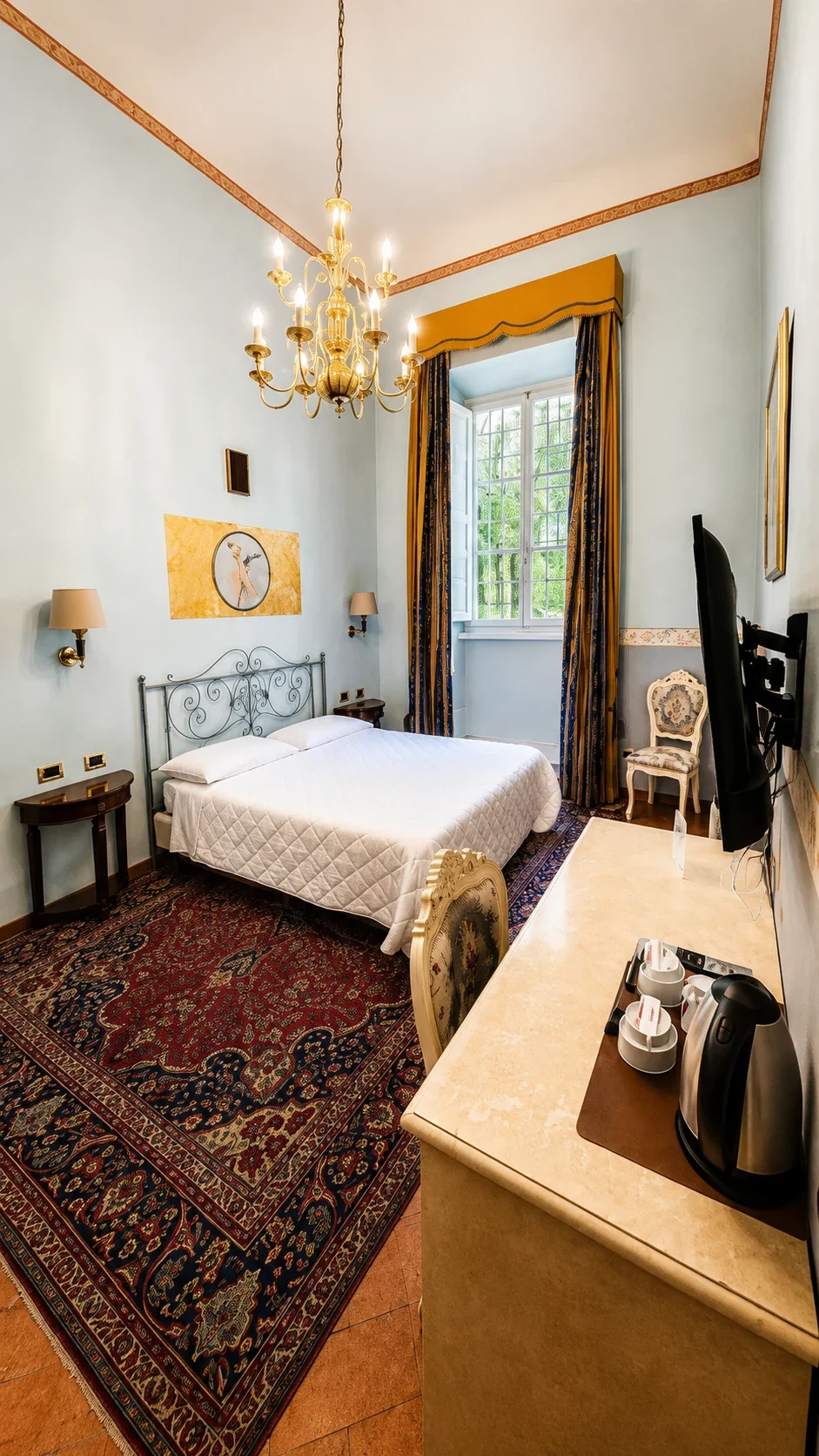
Room 105
The Malenchini Family
Room 105 pays tribute to the Malenchini, an old Lombard family originally from Valmalenco, admitted to the nobility and patriciate of Livorno in 1836. Through trade, the legal professions and the Risorgimento, the family played a leading role in nineteenth-century history: Vincenzo Malenchini fought at Custoza and Solferino, took part in the Expedition of the Thousand and was appointed a senator of the Kingdom and a marquess by Vittorio Emanuele II.
The family's connection with the estate deepened in 1860, when the lawyer Giovanni Malenchini became the owner of Villa Camporella. Their memory lives on in an intimate setting, where the powder-blue walls, geometric frieze and golden chandelier accompany the wrought-iron bed and the classically inspired mural.
The ivory writing desk, decorated chairs and large rug in ruby tones bring warmth to the terracotta floor. Natural light enters through the window, framed by olive-green curtains, reflecting the quiet, aristocratic character of this historic residence.
The room
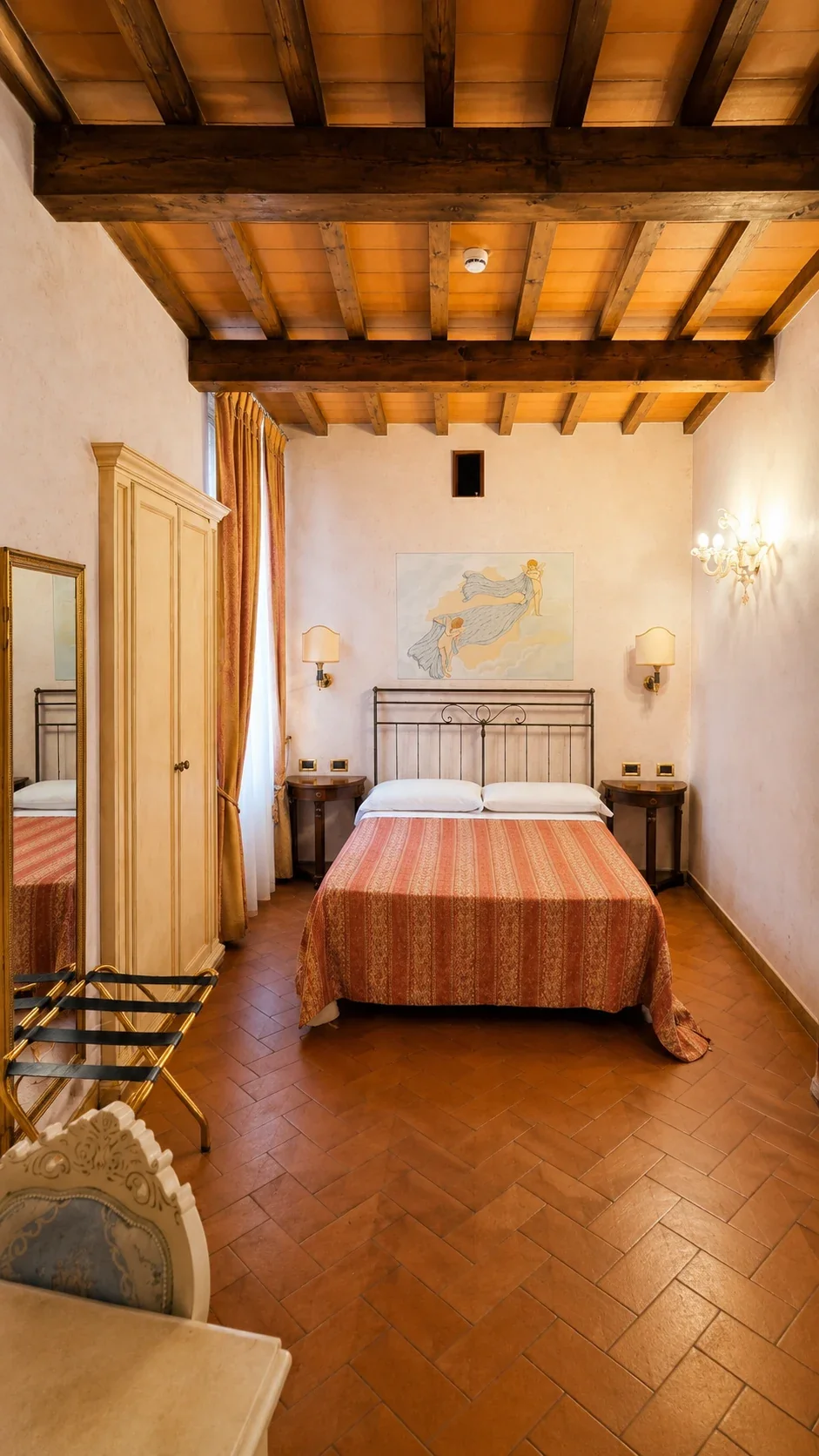
Room 106
The Zefiro Room
In classical mythology, Zefiro is the West Wind, the gentlest and most benevolent of the winds. He announces spring, awakens nature and brings the warmth of rebirth: a symbol of peace, grace and lightness, caressing the world with a calm breath.
Room 106 translates this story into an intimate space of timeless charm. Exposed wooden beams and terracotta flooring preserve the authenticity of the residence, while the natural colours of the furnishings make the space warm and embracing.
Above the bed, a delicate painted scene of celestial figures in flight seems to watch over your rest. Soft light and restrained details turn the room into a peaceful retreat, lulled by the gentle breath of a spring breeze.
The room
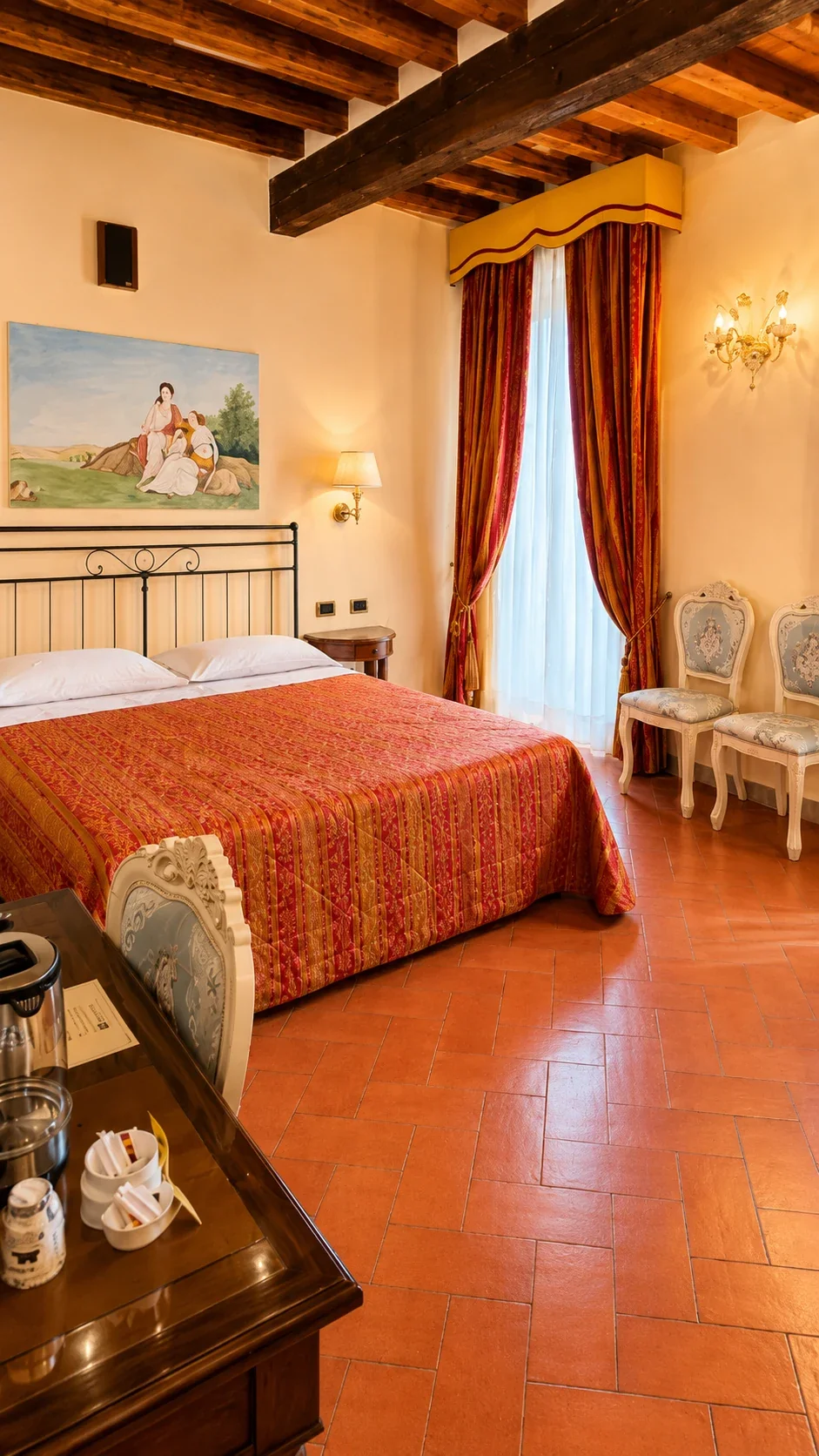
Room 108
The Pastorelle Room
The Pastorelle room takes its name from the mural above the headboard: a pastoral scene with female figures set in a rural landscape. The painting evokes the simple elegance of rural Tuscan life and gives the room a romantic, intimate and timeless atmosphere.
Warm colours, a wrought-iron bed, terracotta flooring and rich drapery create an intimate, welcoming setting. This room is designed for those wishing to experience the more intimate side of Fantastic Garden's history. The Villa was once known as Villa Camporella.
The room
Room 110
Corinna's Retreat
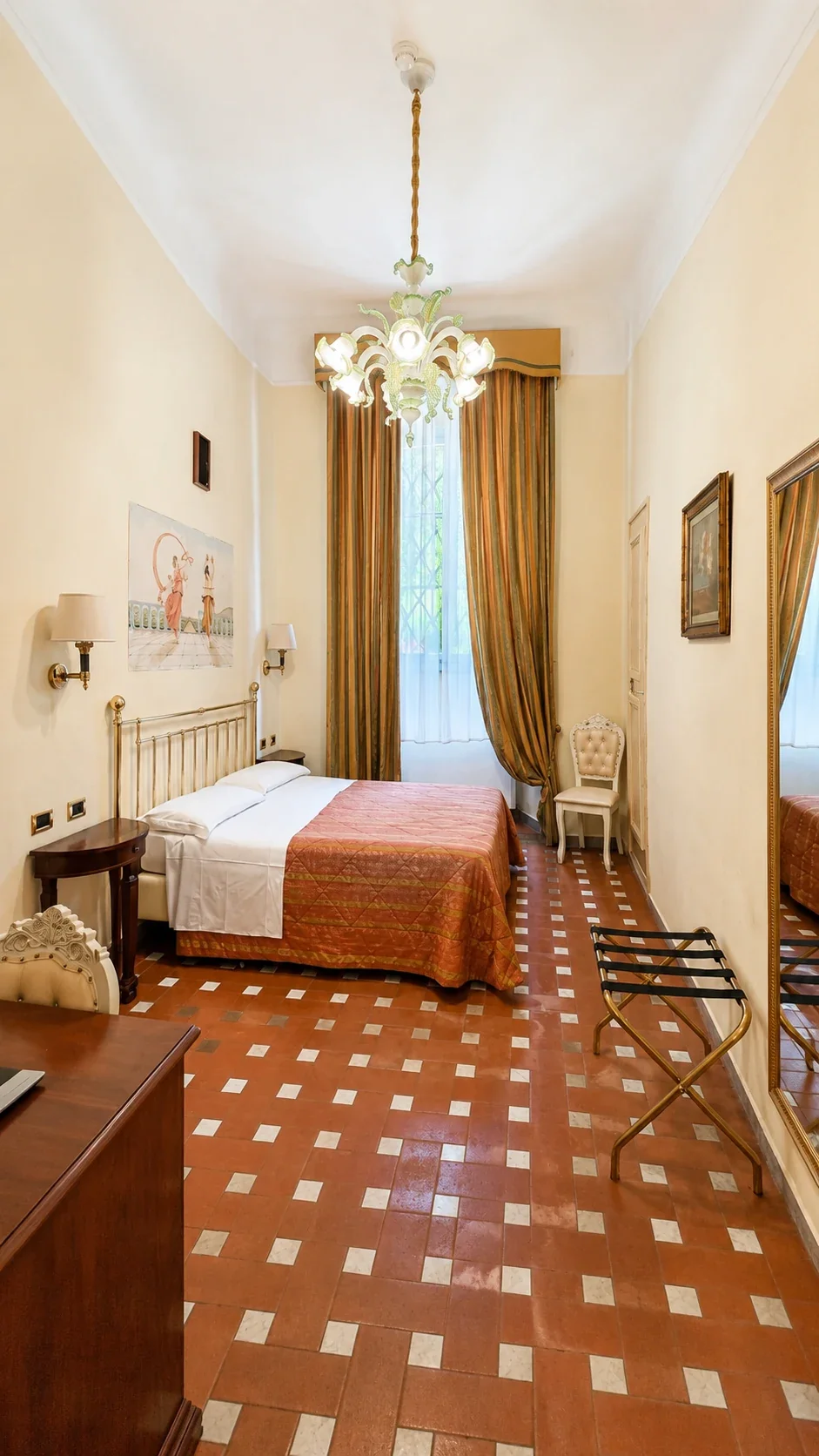
Corinna comes from the ancient Greek Korinna, a diminutive of Kore: maiden. The name evokes freshness, vitality and purity, and also recalls Persefone, the goddess associated with spring and the awakening of nature.
Entering Room 110 means encountering this idea in paint. Above the bed, two female figures seem to move forward in a dance: the room's Corinna figures, timeless young women suspended between history and poetry.
Warm tones, terracotta flooring and golden curtains welcome guests in a soft light. Here, the name becomes an invitation to rediscover lightness and vitality, while the painted maidens continue to dance as silent witnesses to your stay.
The room
Room 111
The Amorini Room
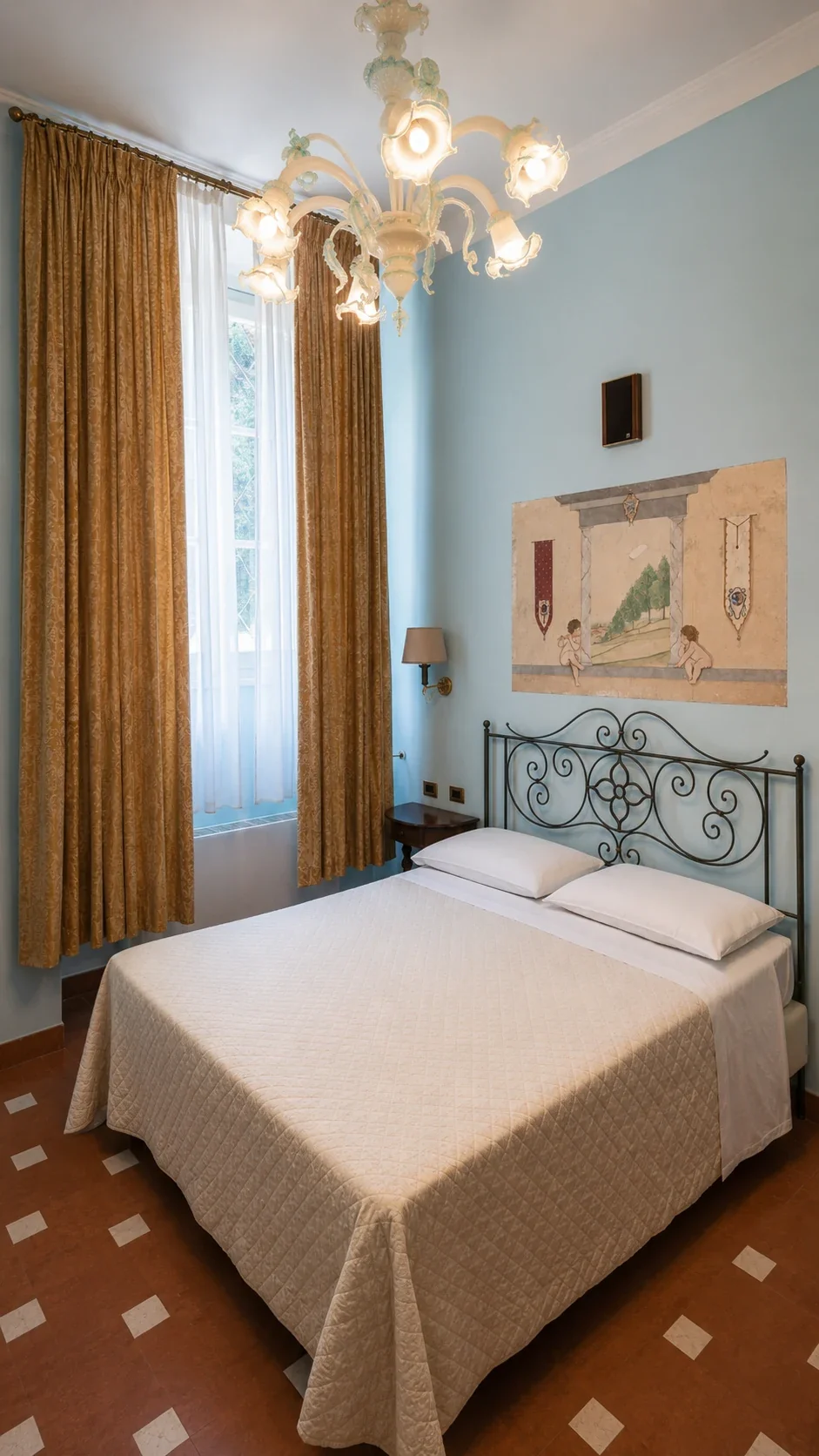
Room 111 is a place where the private history of Tuscan families becomes art. The painting above the bed opens an imaginary window onto the countryside and celebrates the marriage of Marchioness Gesualda Malenchini and Luigi Pozzolini, members of two families connected with the history of the Villa.
On either side of the scene, two Amorini sit beside the families' coats of arms. One plays the flute, while the other contemplates the landscape: more than ornaments, they are auspicious symbols of the union and the prosperity of the residence.
The wrought-iron headboard echoes the lines of the putti, the glass chandelier casts a soft light and the blue walls recall the sky in the painting. Terracotta flooring and golden curtains complete a romantic setting, guarded by the memory of a love dating back a hundred years.
The room
Room 202
Vegoia
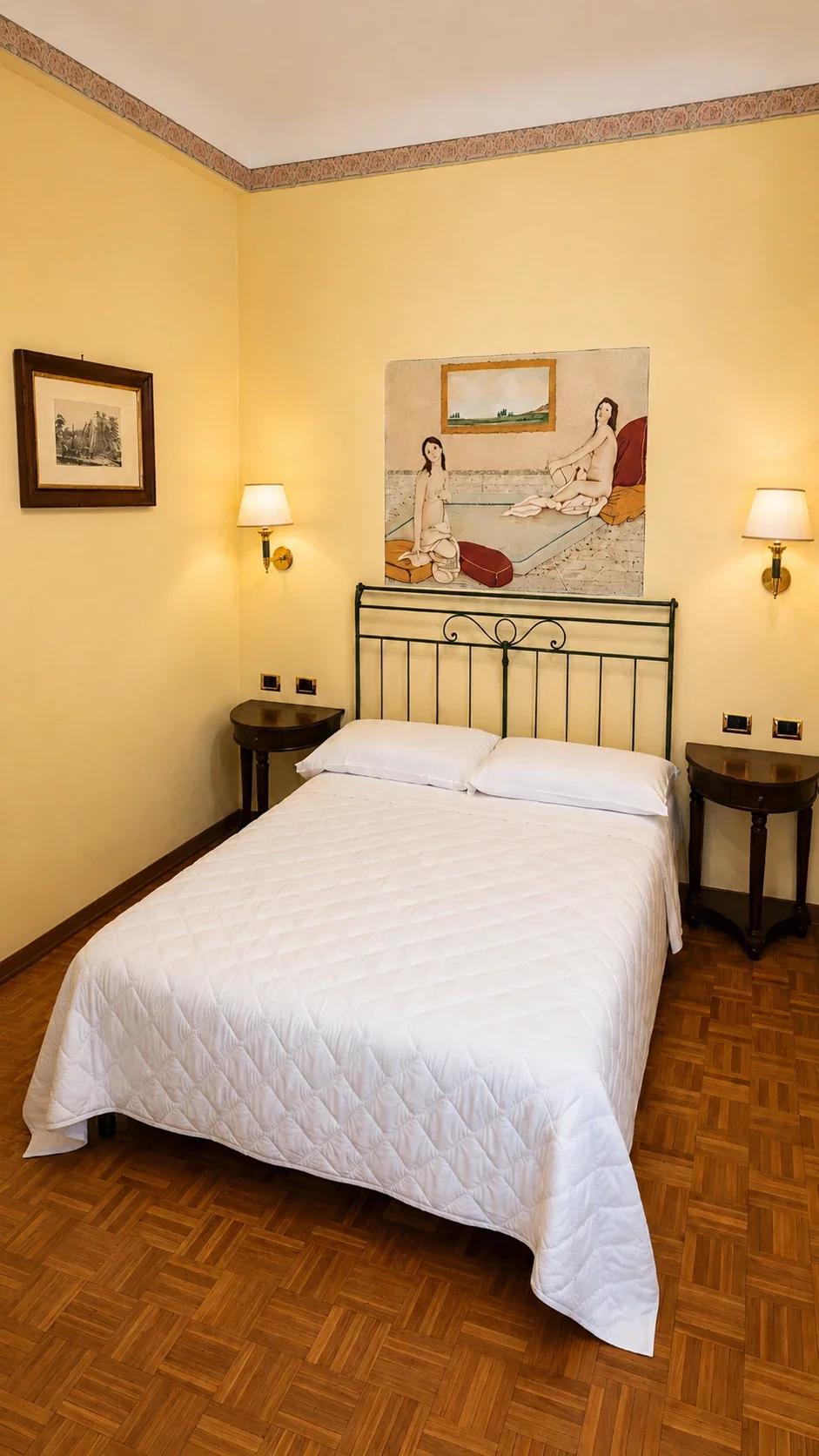
Room 202 is dedicated to Vegoia, an Etruscan prophetess and sage, guardian of the sacred laws that governed the world and the land. Her authoritative voice set out principles of respect for the land that still resonate deeply in Tuscany today.
The painting above the headboard recalls that ancient world and invites a sense of composed tranquillity. Cream-coloured walls, a wrought-iron bed, dark wooden bedside tables and patterned parquet flooring create a warm, restrained and solemn setting.
The frieze running along the walls frames the room like a private chamber in a patrician villa. Protected by Vegoia's aura of wisdom, rest becomes an encounter with history and the ancestral allure of the Etruscan land.
The room
Room 203
Harmonia
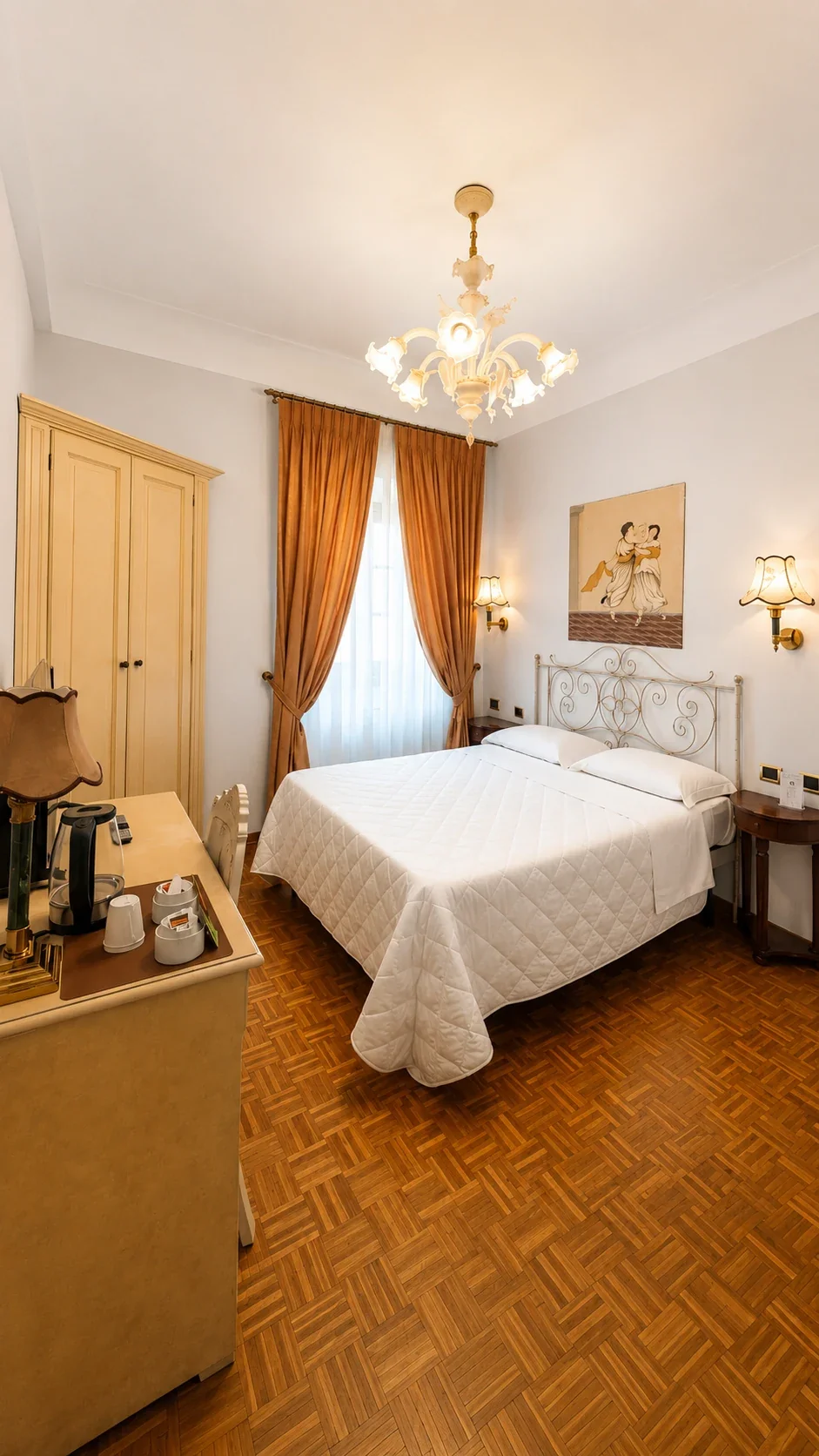
Room 203 is dedicated to Harmonia, a classical figure who embodies balance, order and the union of separate parts. Her presence is an invitation to find your centre and enjoy a moment of true serenity.
Above the bed, two dancing figures draw closer in a fluid movement, an image of the bond that unites opposites. The neutral tones of the walls give the painting room to breathe and fill the space with light.
The wrought-iron headboard, glass chandelier, parquet flooring and golden curtains form a restrained ensemble. Every detail contributes to the same feeling of calm, where classical art and contemporary comfort meet naturally.
The room
Room 204
Thesan
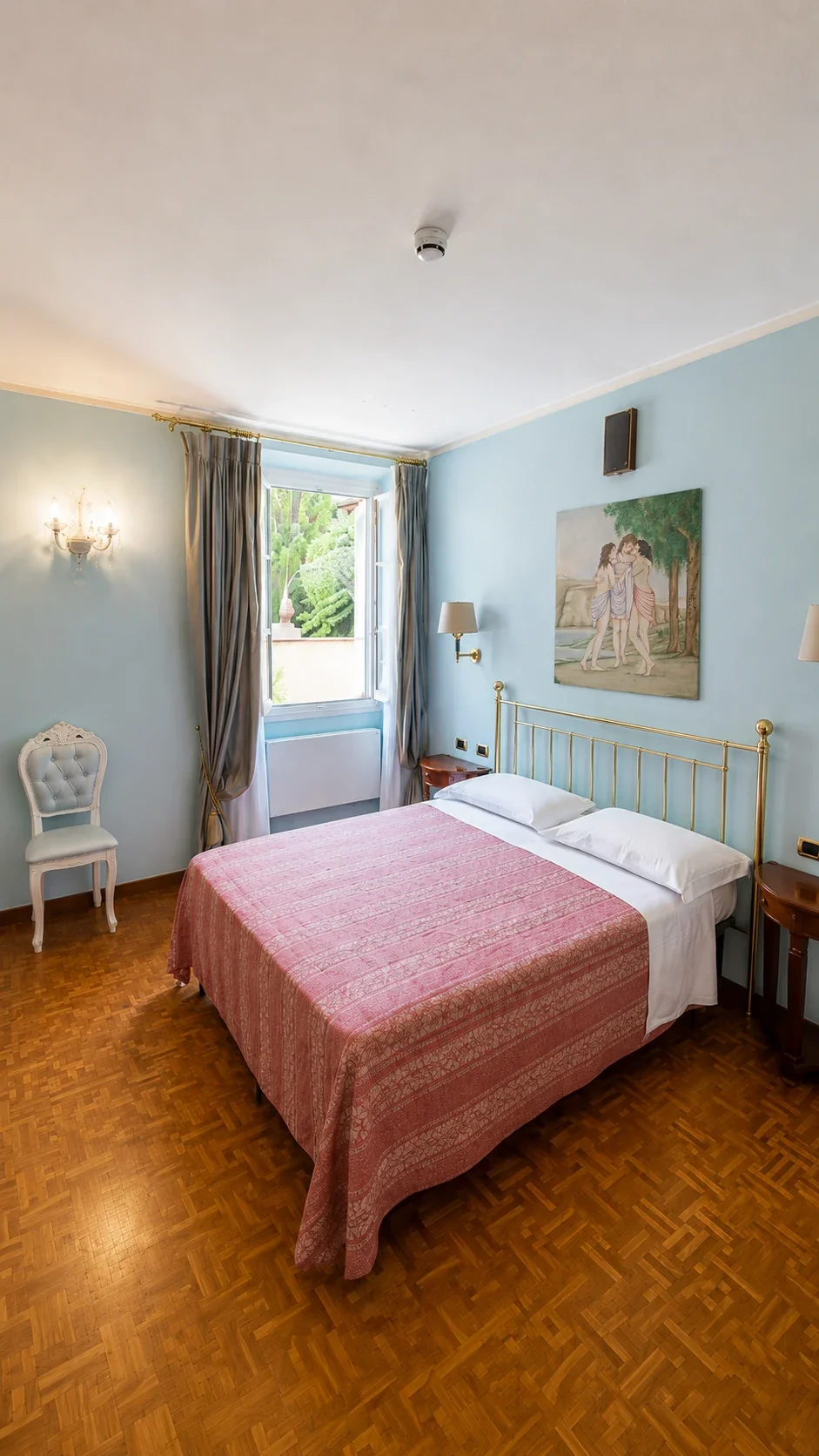
Room 204 is dedicated to Thesan, the ancient Etruscan goddess of dawn, morning and restorative light. Like the Greek Eos and the Roman Aurora, she dispels darkness each day and brings the promise of a new beginning.
The ethereal blue walls evoke the sky as night gives way to the first light. The brass bed reflects the light, while the bucolic painting, patterned parquet flooring and button-tufted seat create a delicate, luminous atmosphere.
The large window looks out onto the inner cloister and its ancient wishing well. This is the secret heart of the room: a place to slow down and entrust a wish for the journey ahead to the goddess of dawn.
The room and its view
Room 205
The Sanctuary of Vesta
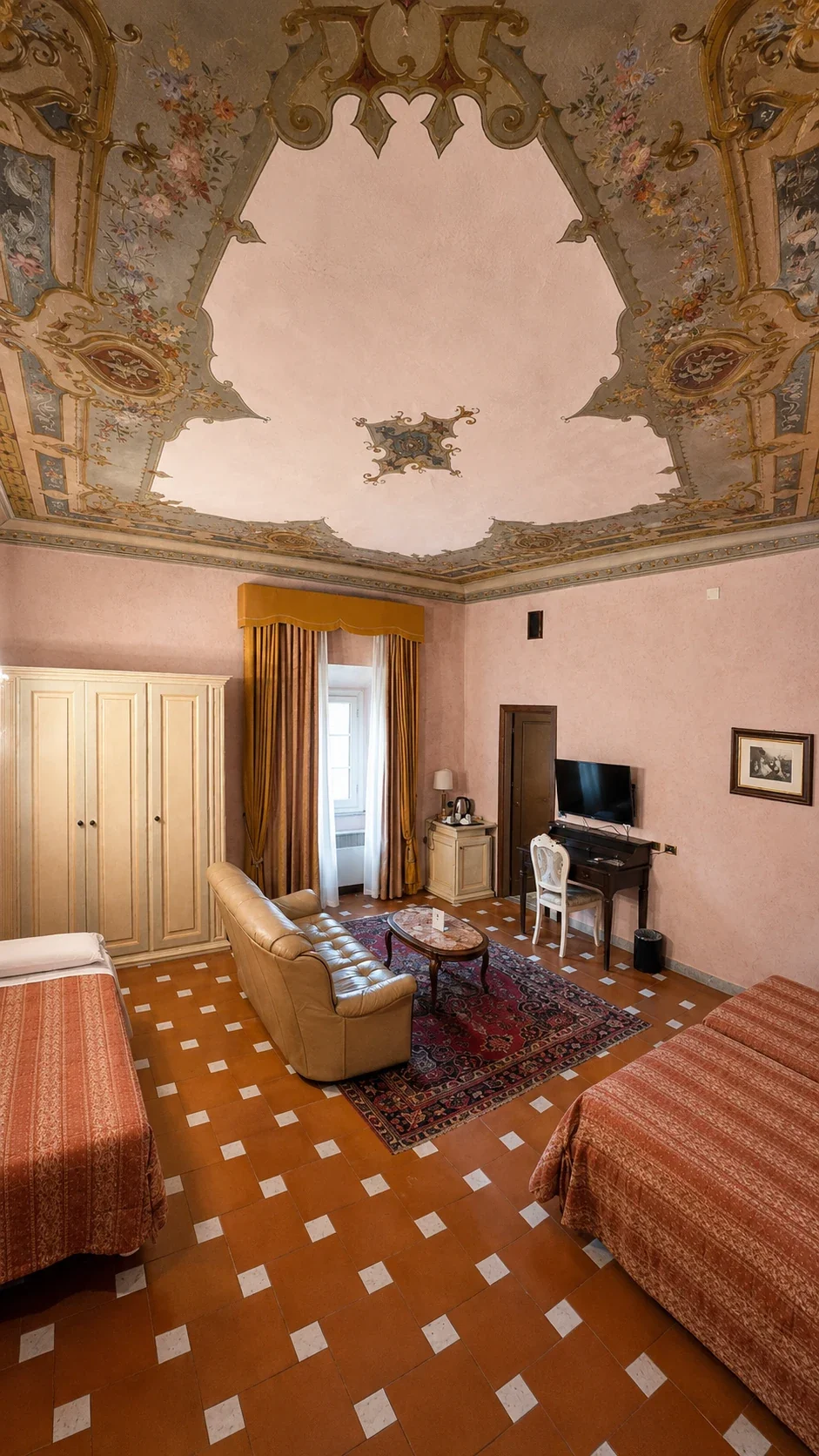
Room 205 pays tribute to Vesta, the deity who personified the home and the sanctity of the hearth in the classical world. Her nature is one of light, stability and peace: the warmth that turns a space into a home and offers travellers a steady point of reference.
Dedicating this room to Vesta celebrates the deepest meaning of hospitality. Here, rest is more than a pause: it is a time for renewal, sheltered by a discreet and reassuring atmosphere.
With sleeping space for three, a sitting area and a large frescoed ceiling, the room is both intimate and airy. Under the goddess's symbolic protection, every guest can leave haste outside and rediscover the pleasure of a home where serenity reigns.
The room and its details
Room 208
The Berardi Family
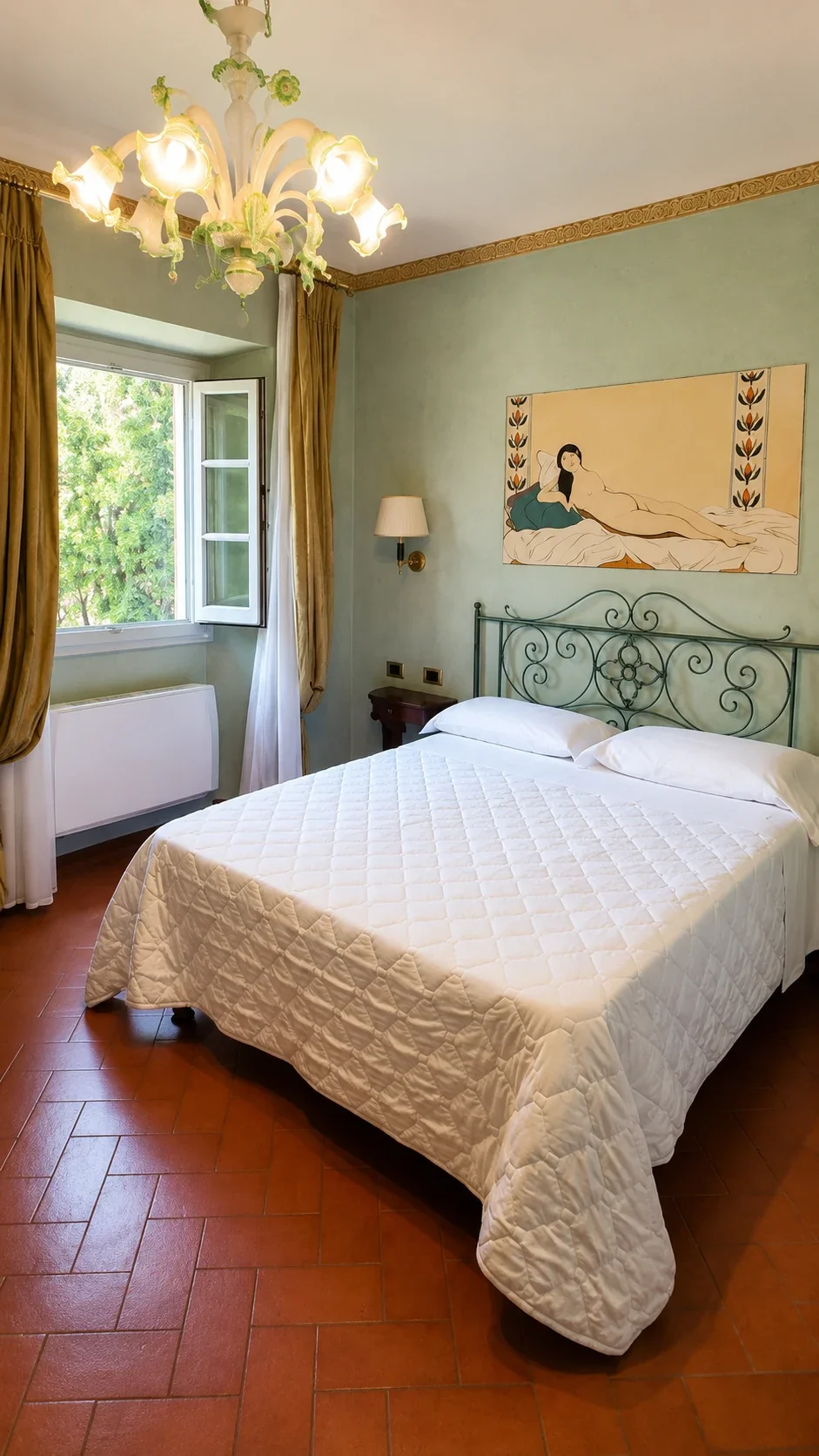
Room 208 pays tribute to the Berardi, an old Florentine family who were among the owners of Villa Camporella in the seventeenth century. Originally from Liguria and later settled in Florence, the family built its fortune through the Arte della Seta, the silk guild, and played a longstanding role in the city's public life.
The family counted Gonfalonieri of the Podestà, Priors, Senators and Knights of Malta and Santo Stefano among its members. Dedicating a room to them means remembering those who lived in, cared for and transformed this residence over the centuries.
Sage-green walls, a golden frieze and a glass chandelier evoke a discreet, aristocratic elegance. The wrought-iron bed and classically inspired painting sit alongside windows overlooking the park, bringing together Florentine history and the quiet of nature.
The room and the family
Room 209
The Terpsicore Room
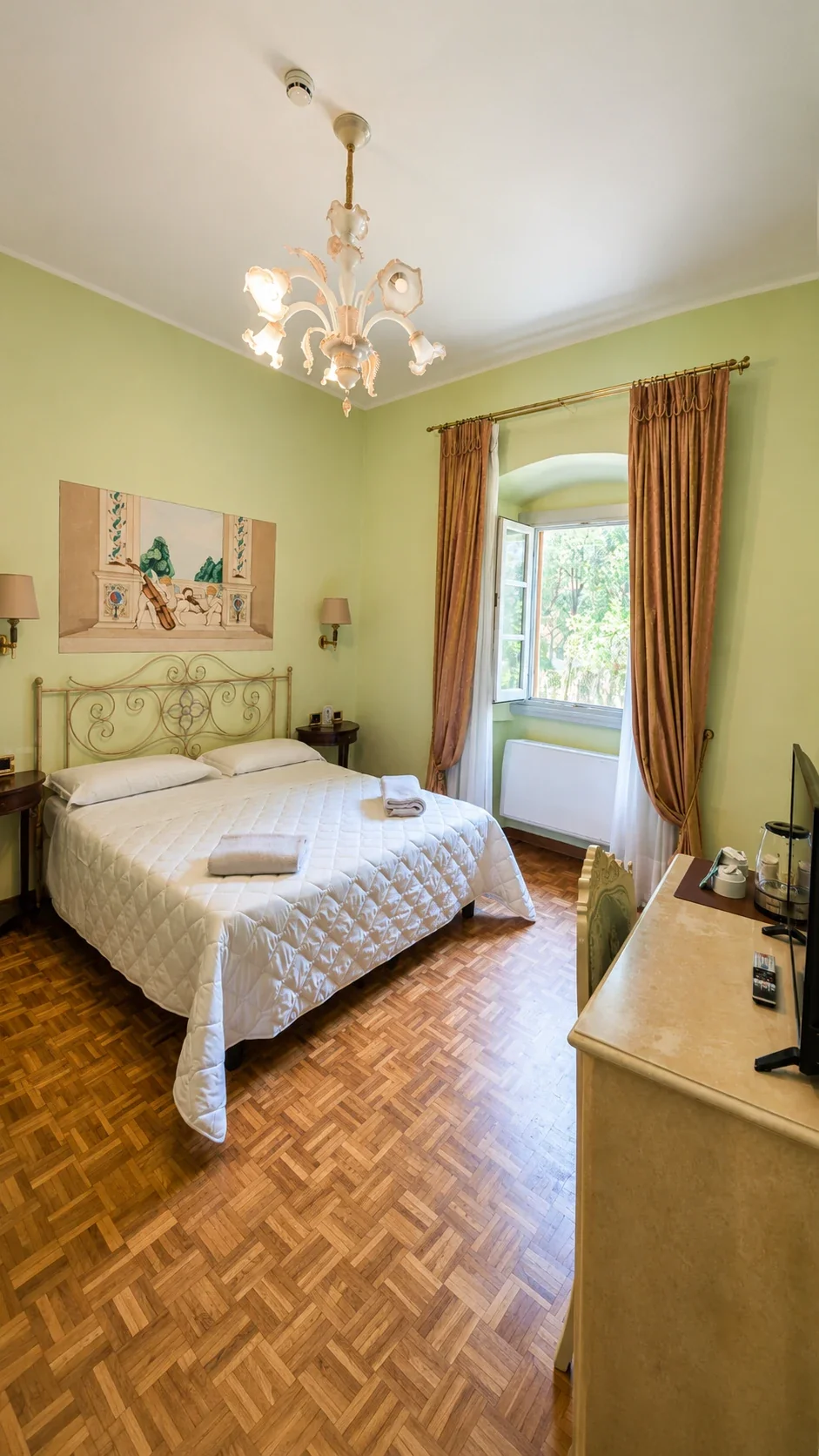
Room 209 is dedicated to Terpsicore, muse of dance and the joy of rhythm. The painting above the headboard celebrates the ancient bond between the sound of instruments and the grace of the body in motion.
Soft light passes across the pastel tones of the walls. The furnishings and fabrics recall the lightness the muse inspired in dancers, turning a stay into a peaceful and invigorating pause.
Every detail invites you to sense the balance that emerges when art and nature meet. In the silence of Fantastic Garden, the room invites you to slow down and rediscover the quiet rhythm of deep rest.
The room
Room 214
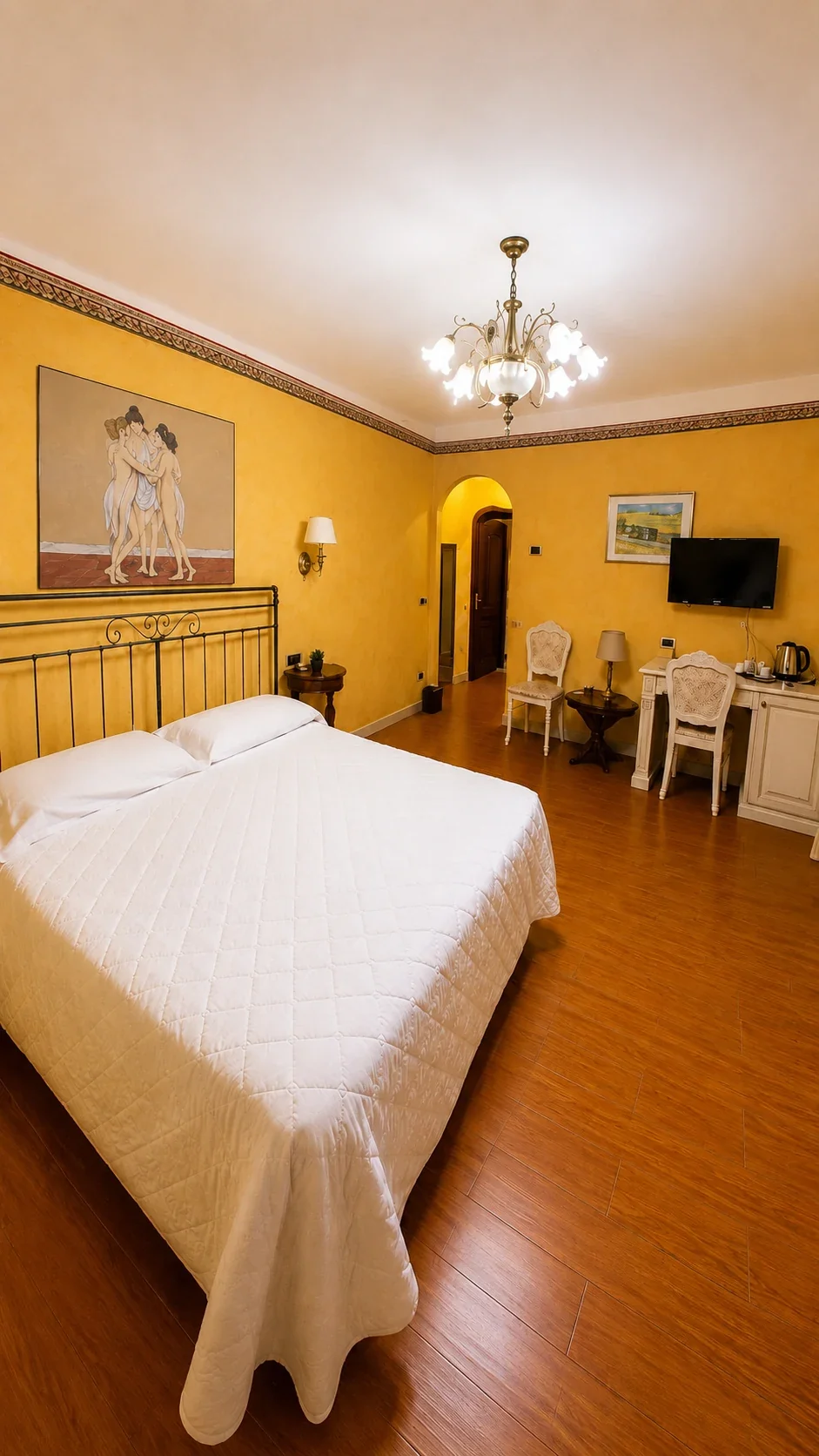
The Tre Grazie
Room 214 celebrates harmony, beauty and joy through the Tre Grazie, depicted in the painting above the headboard in an embrace of neoclassical elegance.
In the Limonaia, three rooms are dedicated individually to Aglaia, Eufrosine and Talia; here, in the central part of the Villa, the three figures are symbolically reunited in a single space.
Ochre-yellow walls, a floral frieze, a wrought-iron bed and a central chandelier bring a warm light into the room. Parquet flooring and white lacquered furnishings complete a retreat where classical myth meets contemporary comfort naturally.
The room
Room 215
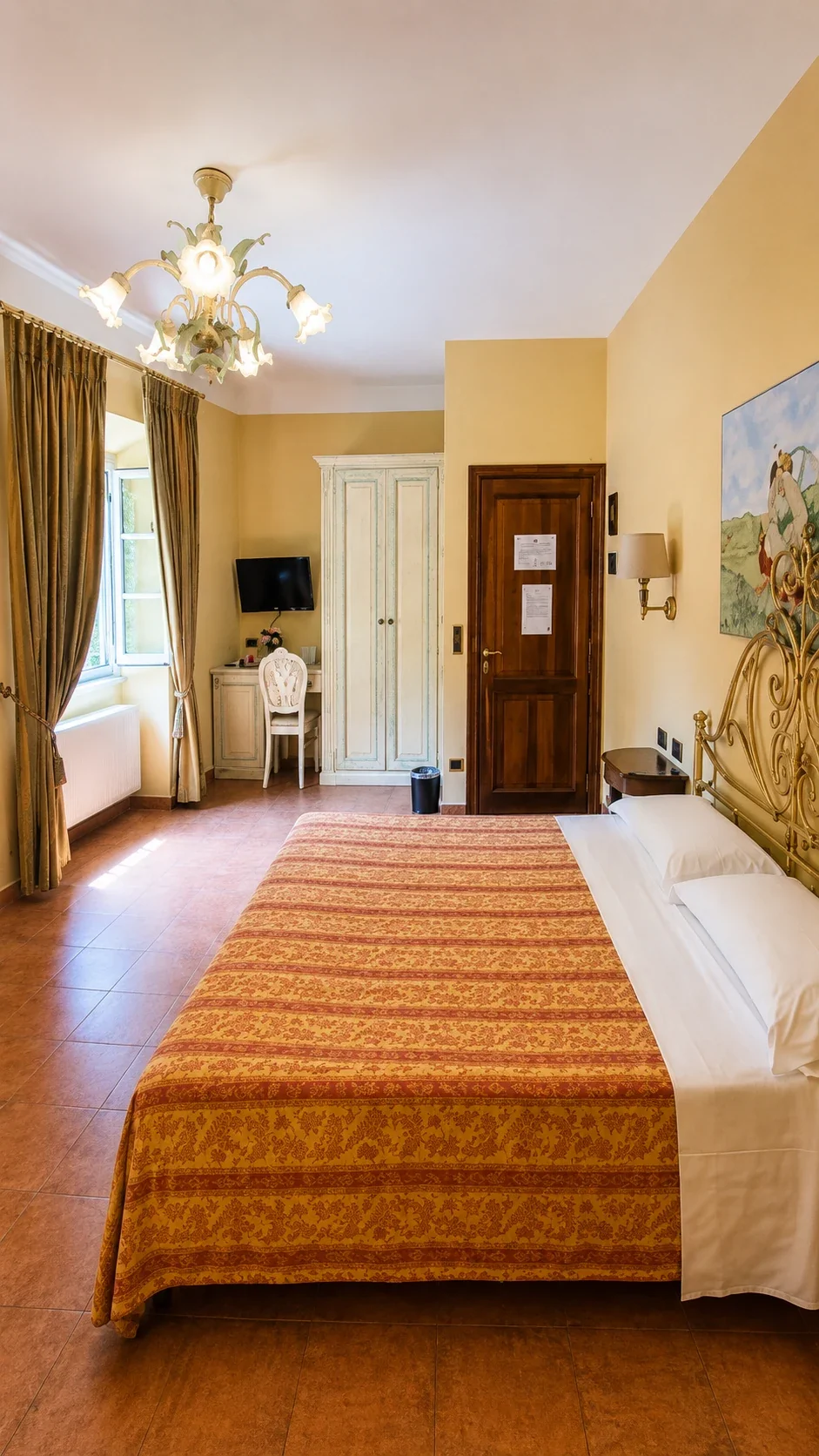
Amore e Psiche
Room 215 tells one of the most romantic stories in classical mythology: the myth of Amore e Psiche. The painting above the bed portrays the two lovers held in an embrace amid nature, an image of the encounter between the human soul and divine love.
Psiche, a mortal maiden of extraordinary beauty, is taken by Amore to his enchanted palace. After trials and separations, the gods grant her immortality and consecrate their eternal union: a story of trust, transformation and harmony.
Golden curtains, a wrought-iron headboard and light-coloured classical furnishings evoke the regal atmosphere of the tale. Terracotta flooring and natural light make the room intimate and welcoming, conceived for a stay suspended between beauty and serenity.